
Understanding Breast Cancer

Read more . . .
Breast cancer is a disease that begins when cells in the breast start to grow in an uncontrolled way. Normally, cells grow and divide in an orderly fashion to keep the body healthy. But when these cells become damaged or abnormal, they may form a lump or mass called a tumor. Some tumors are harmless (benign), but others are cancerous (malignant) and can spread to other parts of the body.
– Most breast cancers start in either:
– The ducts (the tubes that carry milk), called ductal carcinoma, or
– The lobules (the glands that produce milk), called lobular carcinoma.
Breast cancer can affect anyone, though it is most common in women. Men can also develop breast cancer, but it is less common.
Breast cancer is often described as either invasive or carcinoma in situ, depending on how far the abnormal cells have spread. Carcinoma in situ means the cancer cells are still contained within the ducts or lobules where they first developed. They have not spread into surrounding breast tissue, making this an early and highly treatable form. In contrast, invasive breast cancer occurs when cancer cells break out of the ducts or lobules and enter nearby breast tissue. Once invasive, the cancer has the potential to spread to lymph nodes or other parts of the body, which is why early detection and treatment are so important. Both types are serious, but carcinoma in situ is generally considered the earliest, most localized stage.
When Breast Changes Aren’t Cancer

Read more . . .
Benign breast disease refers to any change in the breast that is not cancer. These conditions are very common and can affect people of all ages. Many breast lumps, cysts, or changes found during self-exams or mammograms turn out to be benign.
– Benign breast conditions may include:
– Cysts: Fluid-filled sacs that can feel like soft or firm lumps.
– Fibroadenomas: Smooth, rubbery, non-cancerous lumps commonly found in younger women.
– Fibrocystic changes: Breast tissue that feels lumpy, tender, or swollen—often related to hormonal shifts.
– Inflammation or infections like mastitis.
– Calcifications: Small calcium deposits often seen on mammograms.
– Key things to know:
– Benign breast disease does not mean cancer and usually doesn’t increase cancer risk.
– These conditions are very treatable, and many require no treatment at all.
– Regular screenings and check-ins help ensure everything stays healthy.
– Why reassurance matters:
Finding a lump or change can be frightening, but many breast changes are harmless. Understanding benign breast disease helps patients feel more informed and less anxious while they navigate their breast health.
Between Uncertainty and Hope: B3 Lesions

Read more . . .
B3 lesions are breast abnormalities found on a biopsy that are not clearly benign but also not cancer. They are placed in this special category because, although most are harmless, some have a small risk of containing cancer or developing into cancer in the future. B3 lesions are usually discovered during breast screening or after investigating a symptom such as a lump.
– Common Types of B3 Lesions
– Atypical ductal hyperplasia (ADH)
– Atypical lobular hyperplasia (ALH)
– Lobular carcinoma in situ (LCIS)
– Papillary lesions (e.g., intraductal papilloma)
– Radial scars / complex sclerosing lesions
– Flat epithelial atypia (FEA)
Each type has a different level of risk, which helps determine the best treatment approach.
– Why B3 Lesions Matter? B3 lesions are not breast cancer, but they can:
– Be found alongside an early cancer not detected on the first biopsy
– Indicate a higher future risk of breast cancer
– Require further treatment to ensure no hidden disease remains
Because of this, they are carefully reviewed in multidisciplinary breast teams.
– How B3 Lesions Are Treated
1- Vacuum-Assisted Excision (VAE)
This is the most common treatment.
A small needle device removes more tissue than the first biopsy, usually under local anaesthetic.
This helps:
– Confirm there is no hidden cancer
– Fully remove some types of B3 lesions
Often VAE is both diagnostic and therapeutic—no surgery is required afterward if everything is clear.
2- Surgical Excision
Recommended for certain B3 lesions that have a higher chance of containing cancer (e.g., ADH (atypical ductal hyperplasia)with suspicion, larger lesions). This is a minor operation to remove the entire area.
3- No Further Treatment – Imaging Surveillance
Used only when risk is very low and results are clear after excision.
Usually involves:
– Annual mammograms for a few years
– Then routine screening
This approach depends on the type of lesion and individual patient risk.
Know Yourself: A Journey Into Breast Awareness

Read more . . .
– What Breast Awareness Really Means
Breast awareness is about knowing what is normal for your breasts so you can confidently notice when something changes. It is not about fear, and not about constantly checking — it’s simply being familiar with your own body. You can emphasise:
– Every woman’s breasts are different
– Breasts normally change with age, hormones, weight, and menstrual cycles
– “Awareness” is about understanding your baseline
– How to Check Your Breast (Step-by-step)
– Look (Visual Awareness)
– Stand in front of a mirror with arms by your side, raised, and then on your hips
– Look for changes in shape, contour, or symmetry
– Check the skin: dimpling, puckering, redness, thickening
– Look at nipples: direction, inversion, change in position
– Feel (Physical Check)
Use the flat part of your fingers with gentle pressure:
– Check the whole breast, including the upper outer area (towards the armpit)
– Use a circular, up-and-down, or spiral pattern — whichever feels easiest
– Feel for:
– New lumps
– Thickened areas
– Changes in density
– Unusual tenderness in one spot
– When to Check
– Once a month
– Preferably a few days after your period
– For post-menopausal women: choose the same day each month
– Signs and Symptoms to be Aware of
Present this as calm and clear — not alarming:
– A new lump or thickening
– A lump in the armpit
– Nipple discharge (especially blood-stained)
– A new nipple inversion or change in position
– Skin changes: dimpling, puckering, “orange peel” texture
– A rash around the nipple
– Persistent pain in one breast
– A noticeable change in size or shape
– When to Seek Medical Advice
Encourage calmly and supportively:
– If a change is new and does not go away after 2–3 weeks
– If you feel a lump that doesn’t move or feels different from the rest of the breast
– If you notice a persistent nipple or skin change
– If anything “just doesn’t feel right”
– Lifestyle Tips for Supporting Breast Health
This keeps the section uplifting and proactive:
– Maintain a healthy, stable weight
– Stay physically active
– Reduce alcohol intake (even small reductions help)
– Eat a balanced, colourful diet
– Don’t smoke (or seek support to stop)
– Keep track of hormonal treatments or changes
– Emotional Well-Being & Mindset
Breast awareness can feel overwhelming, especially for those with cancer experience.
You can include:
– It’s normal to feel anxious about breast changes
– How to practice compassionate self-check routines
– Encouragement to talk to friends, partners, or support groups
– Resources for help (counsellors, charities, support lines)
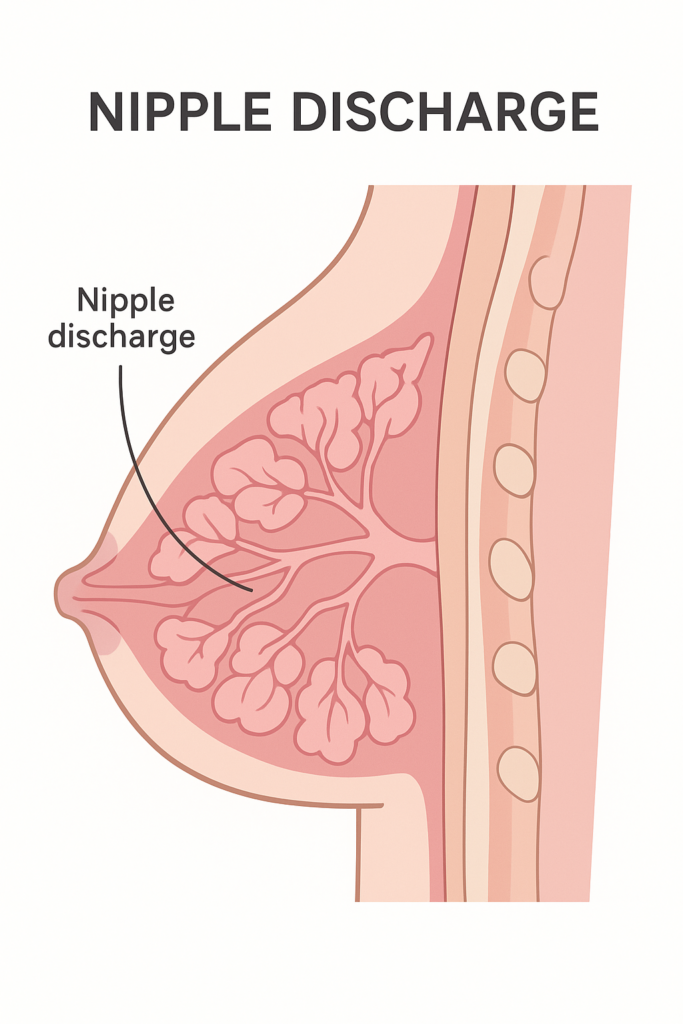
Nipple Discharge: Knowing What’s Normal and What to Watch
Read more . . .
Noticing nipple discharge can be concerning, but it’s important to know that there are many causes, most of which are not serious. Understanding when it’s normal, and when to seek help, can reduce fear and give you peace of mind.
– Understand What Nipple Discharge Is
– Discharge can occur for many reasons, including hormonal changes, infections, or benign growths
– Recognizing that not all discharge is linked to cancer can reduce anxiety
– Know When to Seek Medical Advice
– Any new, persistent, bloody, or unusual discharge should be evaluated by a healthcare professional
– Early consultation helps ensure proper diagnosis and care
– Ask Questions and Gather Information
– Is this discharge normal for my age or cycle?
– Could medication, lifestyle, or hormonal factors be causing it?
– Do I need tests or imaging to understand the cause?
– Take Care of Your Emotional Health
– Worry about breast changes is normal
– Talking to a counselor, patient-support specialist, or trusted friend can provide reassurance
– Build Your Support System
– Lean on friends, family, or support groups for emotional support
– Sharing concerns helps reduce isolation and stress
– Maintain Your Routine While Monitoring
– Keep up with your normal daily activities
– Track any changes or patterns in the discharge to share with your healthcare provider
– Stay Organized
– Keep a notebook or digital record of observations, questions, and medical advice
– Documentation helps you communicate clearly with your doctor and feel in control.
Breast Comfort: Understanding and Managing Pain

Read more . . .
Breast pain is a common experience for many women, whether during or after breast cancer treatment. It can be caused by surgery, radiation, hormonal changes, or other factors. Understanding the cause and ways to manage it can help reduce worry and improve your comfort.
– Understand the Possible Causes
– Pain may result from surgery, radiation, hormonal changes, or muscle tension
– Knowing the cause can help you manage it effectively and reduce anxiety
– Know What to Expect
– Pain may be mild or more intense, temporary or ongoing
– Each person’s experience is unique, and treatment or self-care approaches may vary
– Ask Questions and Gather Information
– What is causing my breast pain?
– Are there treatments, medications, or therapies to relieve it?
– How can I manage discomfort in daily life?
– Take Care of Your Emotional Health
– Persistent pain can be stressful and frustrating
– Emotional support from counselors, patient-support specialists, or loved ones can help you cope
– Build Your Support System
– Lean on friends, family, or support groups to share concerns and receive encouragement
– Discussing pain openly can help you feel less isolated
– Maintain Healthy Routines
– Gentle exercise, proper posture, and self-care can support comfort and recovery
– Rest, hydration, and stress-reducing activities can help manage pain
– Stay Organized
– Keep a log of pain episodes, intensity, triggers, and questions for your healthcare team
– This helps in monitoring symptoms and communicating effectively with your doctor
Men Matter Too: A Guide to Male Breast Cancer

Read more . . .
– Yes, Men Can Get Breast Cancer
Many people don’t realise that men have breast tissue too — and although male breast cancer is rare, it is very real. Because of low awareness, men are often diagnosed later than women, which makes understanding the signs incredibly important.
– About 1 in 100 breast cancers occur in men.
– Men may feel confused or embarrassed when noticing symptoms.
– Early diagnosis can make treatment simpler and more successful.
– Why Does Male Breast Cancer Happen?
Men have a small amount of breast tissue behind the nipple. Cancer can develop when these cells grow abnormally. Provide a simple overview:
Hormones, age, and genetics can all play a role.
– Men naturally produce small amounts of oestrogen.
– Hormonal imbalance can make breast tissue change.
– Risk Factors
– Age — most cases occur in men over 60
– Family history — especially if a close relative had breast cancer
– BRCA1 or BRCA2 genetic mutations — increase risk significantly
– High oestrogen levels — can occur naturally or due to health conditions
– Obesity — extra fat tissue can increase oestrogen
– Liver conditions — may affect hormone levels
– Prior chest radiation — such as for lymphoma
– Klinefelter syndrome — a rare genetic condition
– Early Symptoms in Men
– A firm lump behind or near the nipple
– A nipple that turns inward
– Nipple discharge, including clear or bloody fluid
– A change in the shape or position of the nipple
– Redness, scaling, or thickened skin
– Swelling of the breast area
– A lump or swelling in the armpit
– How Male Breast Cancer Is Diagnosed
– A clinical breast examination
– An ultrasound or mammogram
– A biopsy to confirm findings
– Genetic testing if risk is high
– Treatment Options for Men
– Surgery — often the first treatment
– Radiotherapy — to target remaining cells
– Chemotherapy — depending on tumour characteristics
– Hormone therapy — often effective for hormone-positive cancers
– Targeted therapy — for specific tumour types
– Emotional and Practical Support for Men
– Men may feel surprised, confused, or even embarrassed by symptoms
– Many men mistakenly believe breast cancer is “only for women”
– Talking about symptoms early helps remove shame
– Support groups exist specifically for men
– Partners, friends, and family can be powerful sources of comfort
– How Partners, Family & Friends Can Support a Man With Breast Cancer
– Listen without judgement
– Offer to attend appointments with him
– Support emotional needs, not just physical ones
– Encourage open conversations
Holding Hope: Life With Metastatic Breast Cancer
Read more . . .
– What Metastatic Breast Cancer Is
Metastatic breast cancer — sometimes called Stage IV breast cancer or secondary breast cancer — occurs when breast cancer spreads to other parts of the body, such as the:
– bones
– liver
– lungs
– brain
– lymph nodes
Many people live with metastatic breast cancer for years. It is often managed long-term, like a chronic condition
– How Metastatic Breast Cancer Is Diagnosed
– Scans (CT, MRI, PET, bone scan)
– Blood tests
– Biopsy of a new area (if needed)
– Review of symptoms
– Common Symptoms
Symptoms vary depending on where the cancer has spread:
– Bone Metastases
– Persistent bone pain
– Fractures
– High calcium levels (thirst, tiredness)
– Liver Metastases
– Tummy discomfort
– Feeling bloated
– Jaundice (rare)
– Lung Metastases
– Shortness of breath
– Persistent cough
– Brain Metastases
– Headaches
– Vision changes
– Seizures (rare)
– Treatment Options
Treatment is personalised and aims to control the cancer, reduce symptoms, and support quality of life. Treatment may include:
– Hormone therapy
– Chemotherapy
– Targeted therapies
– Immunotherapy
– Radiotherapy
– Bone-strengthening treatments
– Pain management and supportive care
– Living With Metastatic Breast Cancer
– Managing fatigue, pain, sleep, appetite
– Staying active when possible
– How to talk to family and friends
– Finding balance between hope and reality
– Planning for the future while still living in the present
– How to cope with scan anxiety (“scanxiety”)
– Emotional Well-Being & Mental Health
– It’s normal to feel overwhelmed, scared, angry, or uncertain
– Counselling can help navigate emotions
– Joining support groups reduces loneliness
– Talking to others with metastatic breast cancer can be deeply comforting
–
Support for Families & Carers
– How to support someone emotionally
– Practical help (meals, appointments, rest)
– Looking after your own well-being as a carer
– Open conversations about fears and hopes
– Children’s support and age-appropriate explanations
The High-Risk Patients: Knowledge, Care & Confidence

Read more . . .
– What Does “High Risk” Mean?
Being “high risk” means a person has a higher chance of developing breast cancer than the general population.
It does not mean they will definitely get cancer — only that extra awareness and support are recommended.
– Who Is Considered High Risk?
– Family History
– Several close relatives with breast or ovarian cancer
– A relative diagnosed at a young age
– Male breast cancer in the family
– Genetic Factors
– BRCA1 or BRCA2 gene mutations
– Other hereditary syndromes (e.g., PALB2, TP53)
– Personal Medical History
– Previous atypical breast biopsy (e.g., ADH, ALH, LCIS)
– Previous breast cancer
– Chest radiation at a young age
– Breast Density
– Very dense breast tissue (common and normal, but increases risk)
– Hormonal or Lifestyle Factors
– Long-term hormone therapy
– Early menstruation or late menopause
– Obesity
– Alcohol intake
– How High-Risk Patients Are Supported
People at higher risk may be offered:
– More frequent breast screening
– Screening at an earlier age
– Breast MRI alongside mammograms
– Genetic counselling
– Risk-reducing options depending on personal circumstances
– Emotional Support for High-Risk Patients
High-risk patients often carry:
– worry
– uncertainty
– concerns about the future
– guilt or fear about family risk
Include comforting guidance:
– Talking to healthcare teams about fears is encouraged
– Support groups exist specifically for high-risk individuals
– Mental health support and counselling can be invaluable
– Living with risk does not mean living without peace or joy
– Talking With Family About Risk
Patients often struggle with how to communicate risk to loved ones.
Add practical tips:
– Share information gently, when ready
– Encourage relatives to explore their own risk
– Genetic counselling can support families
– Keep the focus on empowerment, not fear
– Lifestyle Choices That Can Support Breast Health
– Regular physical activity
– A healthy, balanced diet
– Reducing alcohol intake
– Maintaining a healthy weight
– Avoiding smoking
– Being mindful of long-term hormone therapy decisions
Your Genes, Your Journey: Understanding Genetic Testing

Read more . . .
Genetic testing can feel intimidating, emotional, or even overwhelming — but it is ultimately about clarity, empowerment, and support.
It provides information that helps you and your healthcare team better understand your personal breast-cancer risk and make choices that feel right for you.
– What Is Genetic Testing?
Genetic testing looks for specific inherited changes (called mutations) in your DNA that may increase the likelihood of developing breast cancer.
The most well-known genes include:
– BRCA1
– BRCA2
– PALB2
– TP53
– CHEK2
– ATM
– Other less common hereditary cancer genes
A positive result does not mean you will get cancer — it simply means your risk may be higher.
A negative result does not guarantee you will never get cancer — it means no known inherited mutation was found.
– Who Should Consider Genetic Testing?
You may be offered or advised to have genetic testing if you have:
– A strong family history such as:
– Multiple relatives with breast or ovarian cancer
– Family members diagnosed at young ages
– A relative with male breast cancer
– A known gene mutation in the family
– Personal history indicators:
– Breast cancer diagnosed at a young age
– Triple-negative breast cancer
– Bilateral breast cancer
– Certain rare cancer types
– Ethnicity considerations:
Some groups (e.g., Ashkenazi Jewish ancestry) have higher rates of inherited mutations.
– What Does Genetic Testing Involve?
It is simpler than many expect. Most tests are done by:
– a blood sample
– a cheek swab
– or a saliva (spit) test
Results usually take a few weeks.
Before and after testing, you may meet with a genetic counsellor to help you understand:
– what the test looks for
– what results might mean
– how the information can guide your care
– Understanding Results
– Positive Result
A mutation was found. This does not mean you have cancer. It means you may benefit from:
– earlier or more frequent screening
– breast MRI
– risk-reducing medications
– conversations about preventive surgery
– informing family members
– Negative Result
No mutation was found. This may mean your risk is average, or your risk may still be influenced by family history alone.
– Variant of Uncertain Significance (VUS)
A change was found, but its meaning is unclear. Most VUS variations later turn out to be harmless.
– How Genetic Testing Helps With Prevention & Early Detection
Genetic testing allows for personalised care, including:
– Regular breast imaging tailored to your risk
– Earlier screenings
– MRI monitoring
– Medication to lower risk
– Options for preventive surgery (if appropriate)
– More personalised treatment for those already diagnosed
– Emotional Support Through the Testing Journey
– Learning about inherited risk can bring up:
– fear
– guilt
– anxiety
– concerns for children
– uncertainty
– These feelings are valid. Support is available through:
– genetic counsellors
– psychologists
– breast-care nurses
– support groups
– online communities
– Talking to Your Family About Genetic Results
Many people feel unsure about sharing genetic information with relatives. You can approach this gently by:
– explaining the test and what you learned
– reassuring them that knowledge helps, it doesn’t harm
– offering them the chance to explore their own risk
– giving them time to process
You are not responsible for anyone else’s reaction — only for sharing information lovingly when you can.